
Pastor Doug Beutler
How do you know if something is really working?
Even more challenging, how do you know if your church or ministry is truly moving in the right direction?
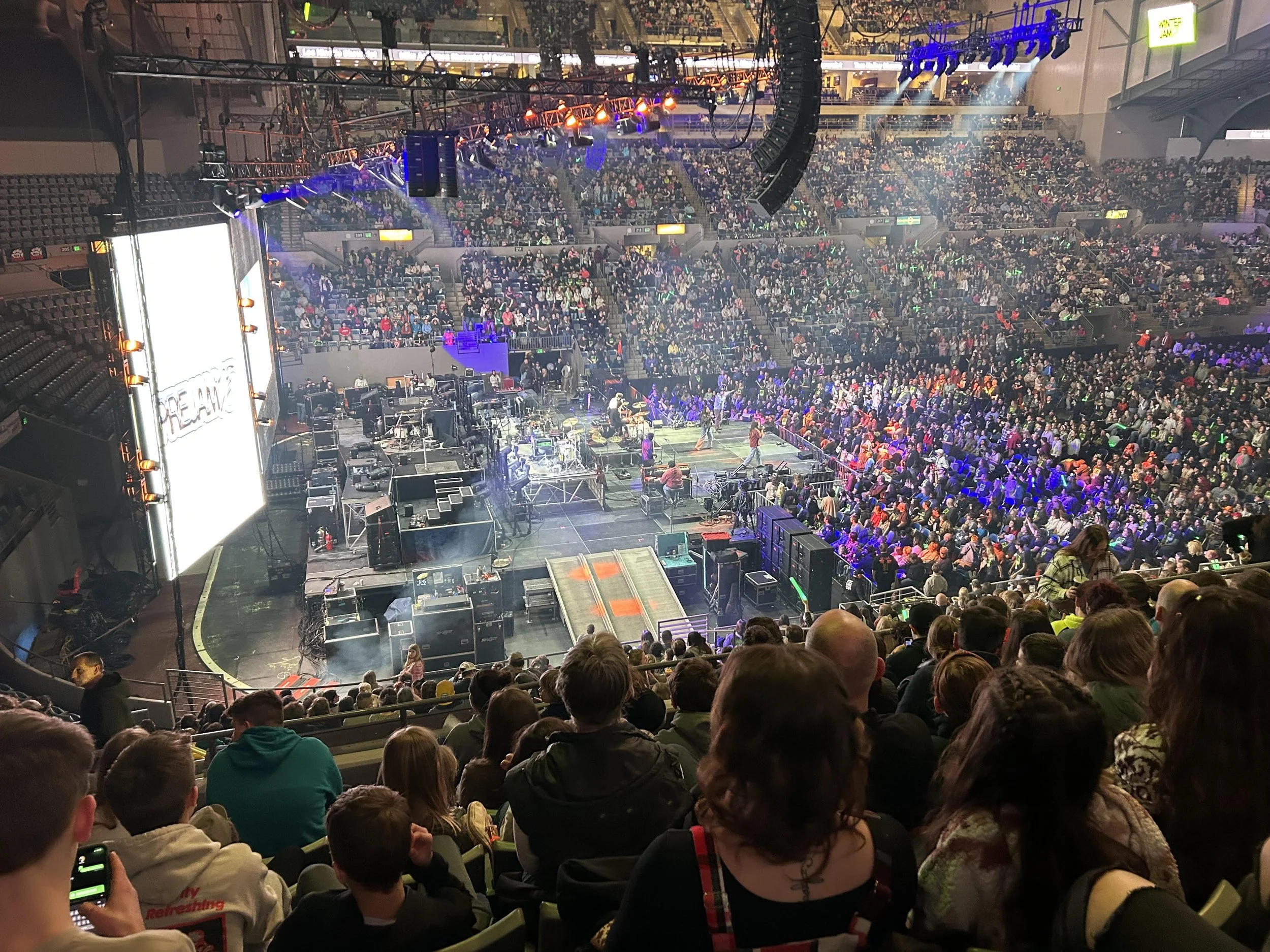
For decades, churches have measured success by what many have called the "Three Bs"—Butts, Budgets, and Buildings. How many people attended? How much money came in? How large is the facility?
Those numbers may tell part of the story, but they don't necessarily tell the story that matters most to Jesus.
The Scorecard Is Changing
The Church is changing.
The statistics tell us that. Pastors tell us that. Congregations tell us that. But more importantly, Scripture calls us to something much deeper than simply gathering crowds.
A growing number of churches are discovering that the real questions aren't about attendance charts or giving reports. Instead, they're asking:
Are we building authentic relationships?
Are we having spiritual conversations?
Are we walking alongside people toward spiritual maturity?
Are we making disciples who make disciples?
That's a completely different scorecard.
And I believe it's the scorecard Jesus intended all along.

Why I Love the Discipleship Tree
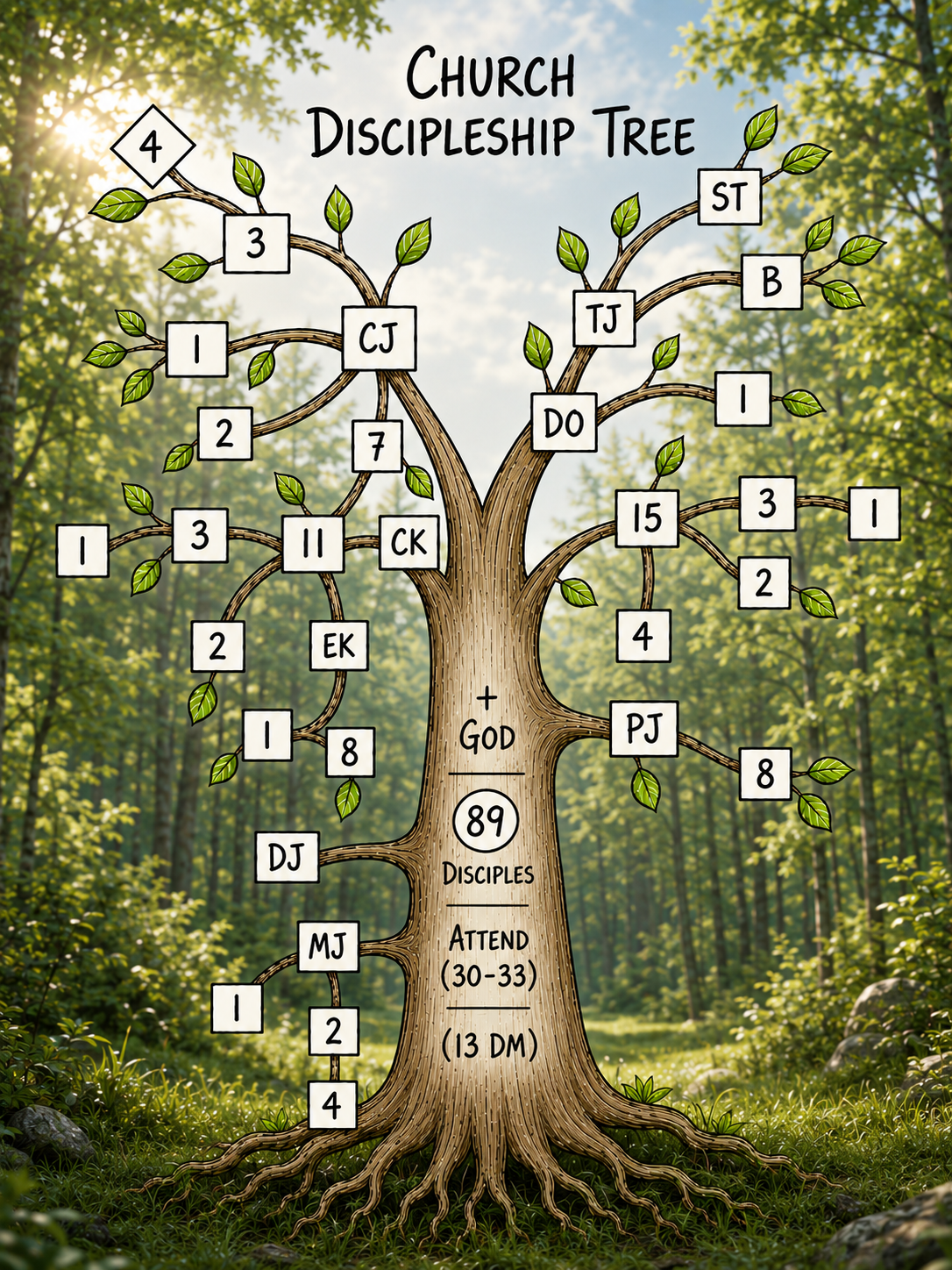
One of the reasons I am so passionate about the Discipleship Tree is that it helps churches measure what truly matters.
Rather than focusing solely on how many people show up on Sunday, the Discipleship Tree helps us see:
Who is intentionally building relationships.
Who is discipling others.
Who is multiplying disciple-makers.
How many generations of discipleship are taking place.
The tree isn't simply about recording names. It's a tool that allows pastors to evaluate spiritual fruit.
As we look at those relationships, we begin asking better questions:
Are people taking meaningful next steps in their faith?
Are they demonstrating the fruit of the Spirit?
Are they spending time in God's Word?
Are they developing a consistent prayer life?
Are they having spiritual conversations with people who don't know Christ?
Are they participating in Bible studies?
Are they gathering faithfully for worship?
Are they serving others?
Most importantly...are they multiplying?
If those things are happening, healthy discipleship is taking place.
If they're not, we know there is a problem we need to address.
The Fruit We're Seeing
Over the past several months, I've had the privilege of walking alongside pastors throughout the Seeds of Change Network with my good friend Jeff Horsman. Together we've worked with churches to develop their Discipleship Trees.
One thing has become abundantly clear.
God is at work.
Lives are changing.
Disciple-makers are multiplying.
People are growing spiritually.
In fact, I honestly believe there are churches that might not even be open today—or would still be stuck in years of decline—had they continued focusing only on attendance instead of intentionally making disciples.
The Numbers Are In
This spring, we surveyed every participating church in the Seeds of Change Network and created a Discipleship Tree for each congregation.
At the time, 21 churches were part of the network.
Here's what we discovered:
Average weekend worship attendance: 46
Average disciple-makers per church: 9
Average people being intentionally discipled: 72
62% of churches had disciples reaching the third generation
38% had disciples reaching the fourth generation
Read that again.
The average church in our network is intentionally discipling 56% more people than attend its Sunday worship service.
Collectively, these 21 churches represent:
958 average weekend worshipers
192 disciple-makers
1,520 people currently being discipled
Think about that.
When was the last time you heard of a church with almost 1,000 people attending on Sunday but intentionally discipling more than 1,500 people?
That's a different kind of success.
That's Kingdom success.
Bigger Isn't Always Better
For far too long we've assumed that small churches have little to offer the Kingdom—that they should simply merge into larger churches because bigger automatically means better.
I don't believe that's true.
Small churches possess incredible strengths.
They build deeper relationships.
They know their communities.
They can respond quickly.
And when they embrace disciple-making, they often become multiplication movements that far exceed what their attendance numbers would ever suggest.
The churches in the Seeds of Change Network are proving exactly that.
Most of these churches will probably never become megachurches.
And that's okay.
Because they're becoming something even more important.
They're becoming churches that make disciples who make disciples.

A New Definition of Success
I believe these churches are on the leading edge of what God is doing to bring spiritual renewal to communities across our nation.
The scorecard is changing.
When we begin measuring what Jesus actually commanded us to do instead of simply counting who showed up on Sunday, we discover something remarkable.
God has been moving all along.
Maybe we've just been keeping the wrong score.
Praise the Lord—God is on the move.